
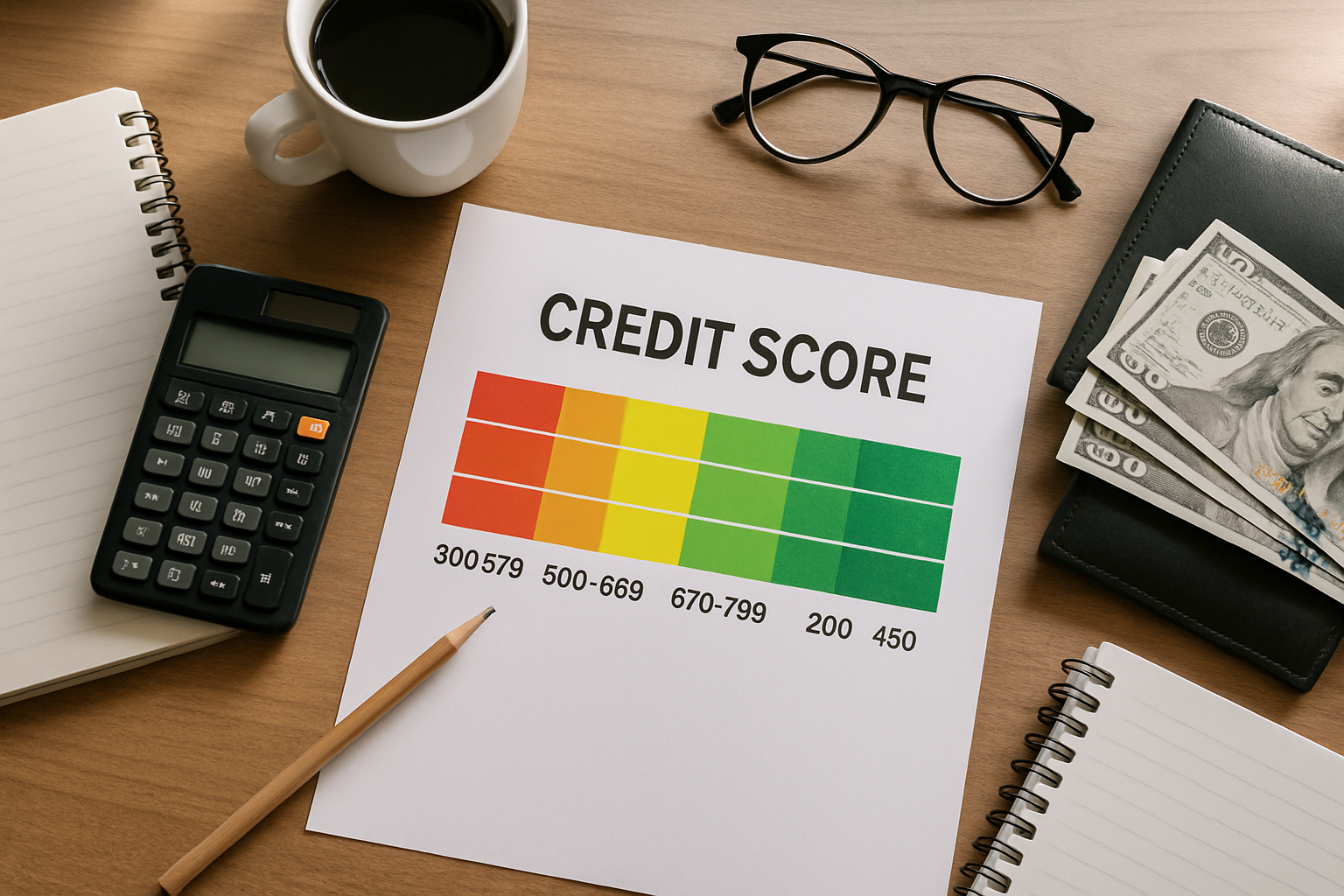
Your credit score is a three-digit number that signals to lenders how reliably you manage debt. Understanding credit score ranges explained helps you see exactly where you stand. These ranges directly affect the interest rates, loan approvals, and credit limits available to you. Rather than chasing a vague idea of “good credit,” you gain a concrete target to aim for.
Table of Contents
- How Credit Score Ranges Explained Are Structured
- What Each Credit Score Range Actually Means in Practice
- Where Americans Stand Right Now
- Factors That Move You Between Credit Score Ranges
- Things to Know
- How Credit Scores Fit Into Broader Financial Planning
- Take Control of Your Credit and Your Financial Future
- Frequently Asked Questions
How Credit Score Ranges Explained Are Structured
The two most widely used scoring models in the United States are FICO and VantageScore. Both use a scale of 300 to 850. Lenders, mortgage companies, and credit card issuers rely heavily on FICO scores. Therefore, that model serves as the primary reference point here.
The standard FICO credit score ranges explained break down as follows:
| Score Range | Category | What It Signals |
|---|---|---|
| 800 – 850 | Exceptional | Lowest risk; best rates available |
| 740 – 799 | Very Good | Near-top rates; strong approval odds |
| 670 – 739 | Good | Approved by most lenders; average rates |
| 580 – 669 | Fair | Higher rates; some approval restrictions |
| 300 – 579 | Poor | Difficult approvals; secured products common |
These thresholds are not arbitrary. They reflect actuarial data that links score ranges to the likelihood of a borrower missing payments by 90 or more days within the next 24 months. The higher your score, the lower that statistical risk. As a result, lenders price their products more favorably.
What Each Credit Score Range Actually Means in Practice
Exceptional (800-850): Borrowers in this tier typically qualify for the lowest mortgage rates. They also access zero-interest promotional credit cards and the most competitive auto loan terms. Lenders view these applicants as extremely low risk.
Reaching and maintaining this range generally requires years of consistent, on-time payment history. Additionally, you need low credit utilization and a diverse credit mix. The effort pays off through substantially better borrowing terms.
Very Good (740-799): Most lenders treat this range nearly identically to exceptional. You will qualify for competitive rates on mortgages and personal loans. However, you may occasionally miss the absolute floor rate reserved for 800-plus borrowers.
Good (670-739): This is the broad middle tier where the majority of American borrowers fall. Approvals are routine in this range. In contrast, interest rates are noticeably higher than those available in the very good or exceptional range.
A borrower financing a $300,000 mortgage in this tier could pay meaningfully more over a 30-year loan. Someone in the 760-plus bracket would enjoy substantially lower costs. Understanding this difference motivates score improvement.
Fair (580-669): Borrowers here often face higher annual percentage rates and smaller credit limits. Moreover, occasional denials from prime lenders occur at this level. Subprime auto loans and secured credit cards become more common.
If you are in this range, learning how to raise credit score fast can have an immediate, measurable financial impact.
Poor (300-579): This tier makes mainstream credit approval difficult. Secured cards, credit-builder loans, and becoming an authorized user on a responsible person’s account are common starting points. Improvement is absolutely possible. However, it requires discipline and time.
Where Americans Stand Right Now
The national picture offers useful context for understanding where you fit. According to Experian’s 2025 Consumer Credit Review, the average credit score in the U.S. was 713 in 2025.
FICO’s own data provides additional perspective. The FICO Score Credit Insights Report released in March 2026 placed the average at 714 as of October 2025. This represents a two-point drop from October 2024. Moreover, this marks the first annual decline since 2013.
The distribution tells a more nuanced story. Seventy percent of consumers currently hold a FICO score of 670 or higher. This places them in the good tier or above. At the top, 48.1% of U.S. consumers now score 750 or higher. This is up from 43.3% in October 2019.
Furthermore, 24.8% score in the 800 to 850 range. This represents the highest share on record, according to FICO. At the same time, lower-score segments are growing. Consumers scoring 300 to 499 rose to 3.6% from 3.2% in the prior year. Additionally, those scoring 500 to 549 rose to 7.0% from 6.3%, per the same FICO report.
The polarization reflects real financial pressure. A FICO Harris Poll survey from February 2026 found that 83% of Americans say maintaining or improving their credit score is a priority. Yet nearly one in four admitted they missed a payment or paid less than the minimum in the past 12 months due to inflation.
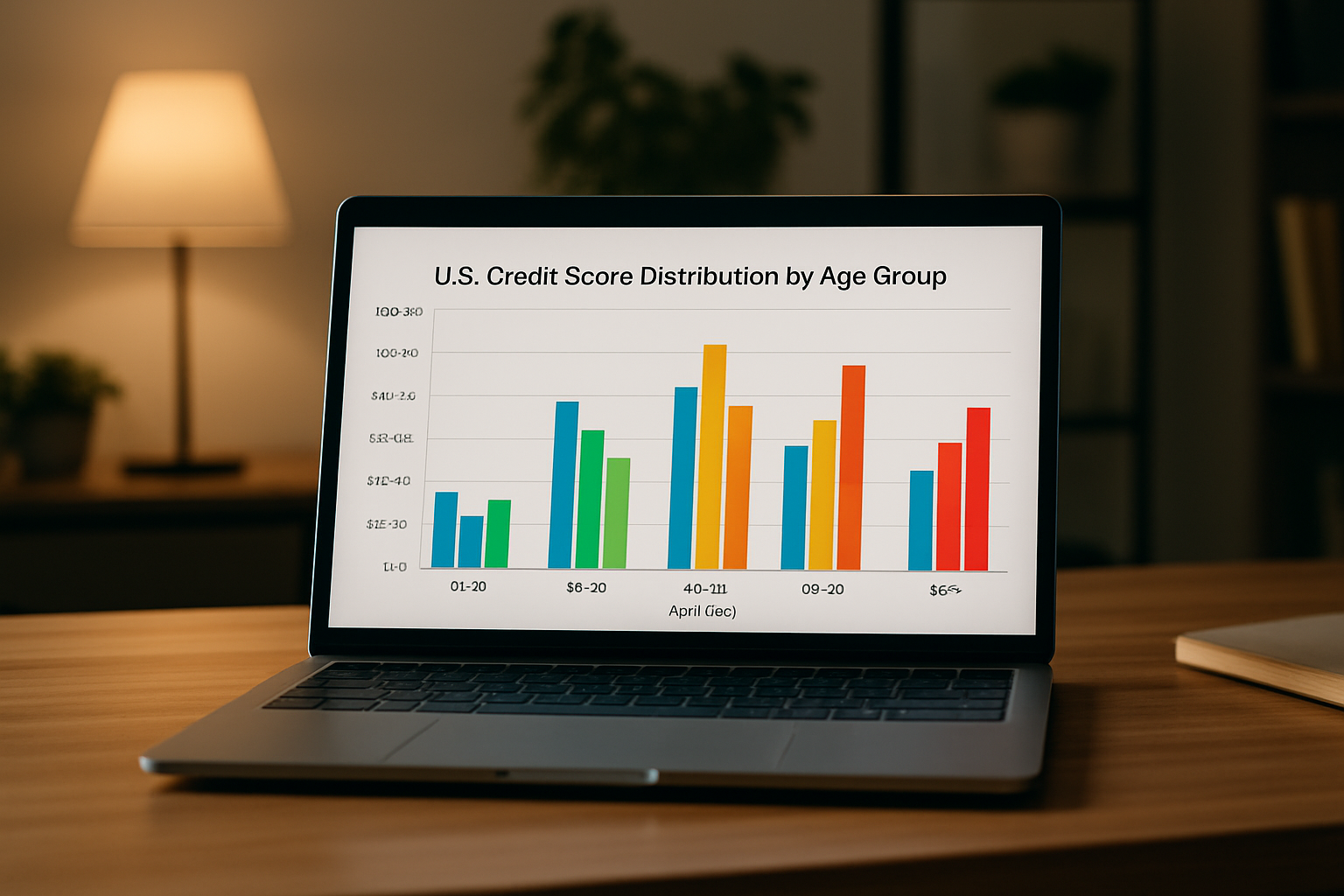
Demographically, baby boomers average a score of 746. This places them well into the very good range. Meanwhile, millennials average 691. This sits at the lower end of good. Gen Z consumers experienced the largest year-over-year FICO score decrease of any age group, dropping three points. The same FICO Credit Insights report documented this trend.

Factors That Move You Between Credit Score Ranges
FICO calculates scores from five components. Each carries a different weight. Understanding these levers lets you prioritize which behaviors will shift your score most efficiently.
- Payment history (35%): This is the single biggest factor. Even one 30-day late payment can drop a score by a significant margin.
- Amounts owed / credit utilization (30%): Using more than 30% of your available credit across cards tends to drag scores down. Below 10% is optimal for maximum benefit.
- Length of credit history (15%): Older accounts in good standing raise your average account age. This helps your score substantially.
- Credit mix (10%): Having both revolving credit (cards) and installment loans (auto, mortgage) demonstrates you can manage different debt types effectively.
- New credit (10%): Each hard inquiry from a new application causes a small, temporary dip in your score.
Things to Know
- Checking your own credit score is a soft inquiry. Therefore, it does not affect your score at all.
- Paying down a high-balance credit card can move your score up within a single billing cycle. This happens once the new balance is reported to bureaus.
- Closing old credit cards generally hurts your score. In contrast, keeping them open strengthens your profile by maintaining available credit and credit history length.
- Medical debt reporting rules changed in 2023 under CFPB guidance. As a result, some medical collections now have less impact on FICO scores.
- Your credit score is separate from your credit report. Errors on the report, not the score itself, are what you dispute with bureaus such as Equifax, Experian, and TransUnion.
How Credit Scores Fit Into Broader Financial Planning
Credit scores do not exist in isolation. Your score affects how much you pay for a mortgage. This shapes how much you can invest. In turn, this determines how comfortably you retire.
If you are mapping out retirement savings by age, a lower score can quietly undermine those projections. A lower score adds unnecessary interest costs to major purchases. Similarly, when you use a social security benefits calculator to estimate future income, it helps to know something important. Your credit-related expenses today directly influence how much you will need to bridge any retirement income gap.
For a more complete picture, pair your credit improvement efforts with a clear answer to how much do i need to retire. This approach gives your financial decisions a real destination. You coordinate credit strategy with broader wealth goals.
Take Control of Your Credit and Your Financial Future
Your credit score is one piece of a larger financial puzzle. Getting it right can save you tens of thousands of dollars over a lifetime of borrowing. The advisors in the Best Financial Advisors network are vetted fiduciary-minded professionals who can help you build a plan that addresses credit, debt management, and long-term wealth building in one coordinated strategy.
Connect with a vetted financial advisor today and get matched with a professional who understands your goals, your location, and your timeline.
Frequently Asked Questions
Q: What credit score do you need to get the best mortgage rate?
Most lenders reserve their lowest mortgage rates for borrowers with FICO scores of 760 or higher.
Below that threshold, rates begin to step up in increments. Even moving from 740 to 760 can make a meaningful difference on a 30-year loan. It is worth checking your score at least three to six months before applying for a mortgage. This allows time for corrections or improvements before lenders pull your report.
Q: How long does it take to move from a fair to a good credit score?
The timeline depends on what is dragging your score down. However, most people can move from the 580-669 range to 670-plus within six to eighteen months of consistent positive behavior.
The fastest wins typically come from paying down high credit card balances. Additionally, resolving any recent late payments accelerates improvement. Negative marks like collections or charge-offs take longer to overcome. These remain on your credit report for up to seven years.
Q: Does carrying a small balance on your credit card help your credit score?
No. This is a persistent myth. Carrying a balance does not help your credit score and only results in paying interest charges.
What matters to your score is that you use your card and pay it off. Having a zero balance reported on your credit card is fine. In fact, many scoring experts recommend keeping utilization under 10% for optimal results.
Q: Can a credit score drop because of too many on-time payments from new accounts?
Not directly. However, opening several new accounts in a short period will lower your average account age and generate multiple hard inquiries, both of which can temporarily reduce your score.
The key word is temporarily. Those factors carry less weight over time. Moreover, the new accounts eventually strengthen your overall credit profile if managed responsibly.
Q: Is a 700 credit score considered good?
Yes, a score of 700 sits within the good range (670-739) and qualifies you for most mainstream lending products.
That said, you are not at the top of the tier, which means you may not access the very best rates. Borrowers at 700 who push into the 740-plus very good range typically see noticeable improvements. The loan terms they are offered become substantially better.